How we designed & developed Alter 03 — the lore behind the loom
Alter 03 — Kanchipuram Saris & Thinking Machines. Our best designed piece yet.
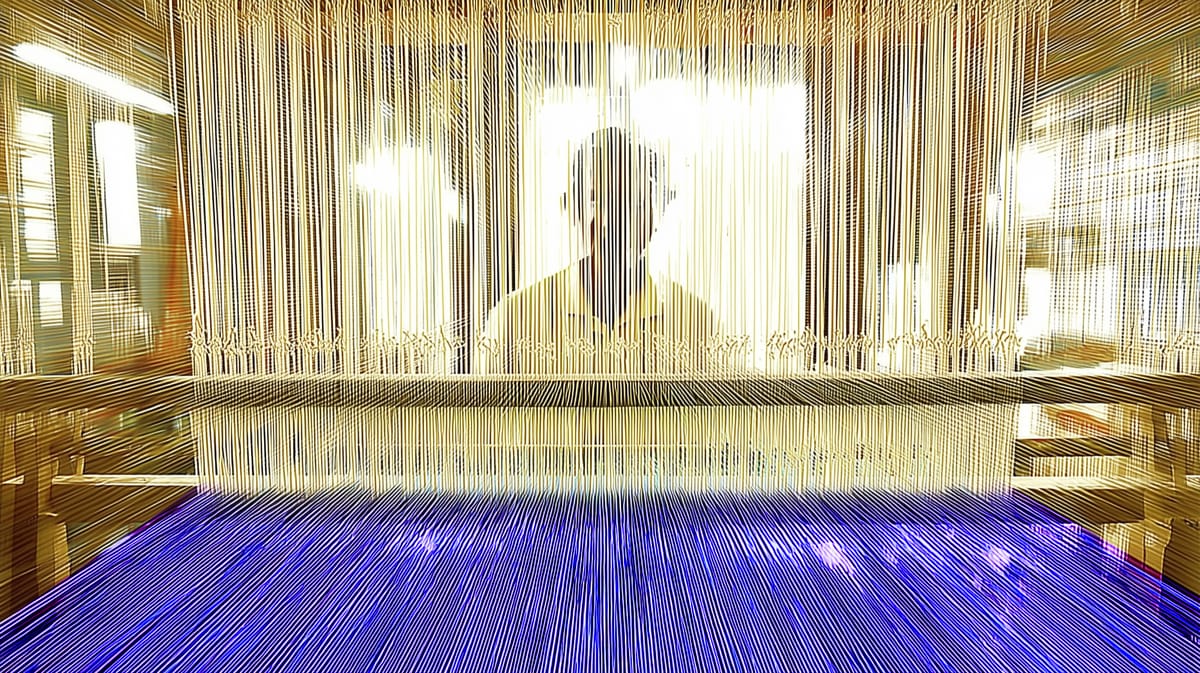
We got our hands on Alter Article 03 nearly 3 months back.
It has taken us about 2 months to think through the design and delivery of this piece. Our attention gravitated, almost instinctively, toward the saree itself. This was not surprising.
The Kanchipuram sari is an object that carries weight, history, labour, and beauty in a form that is already visually complete. Its borders, its sheen, its density of colour and metal thread offer a kind of aesthetic finality that design culture is trained to admire.
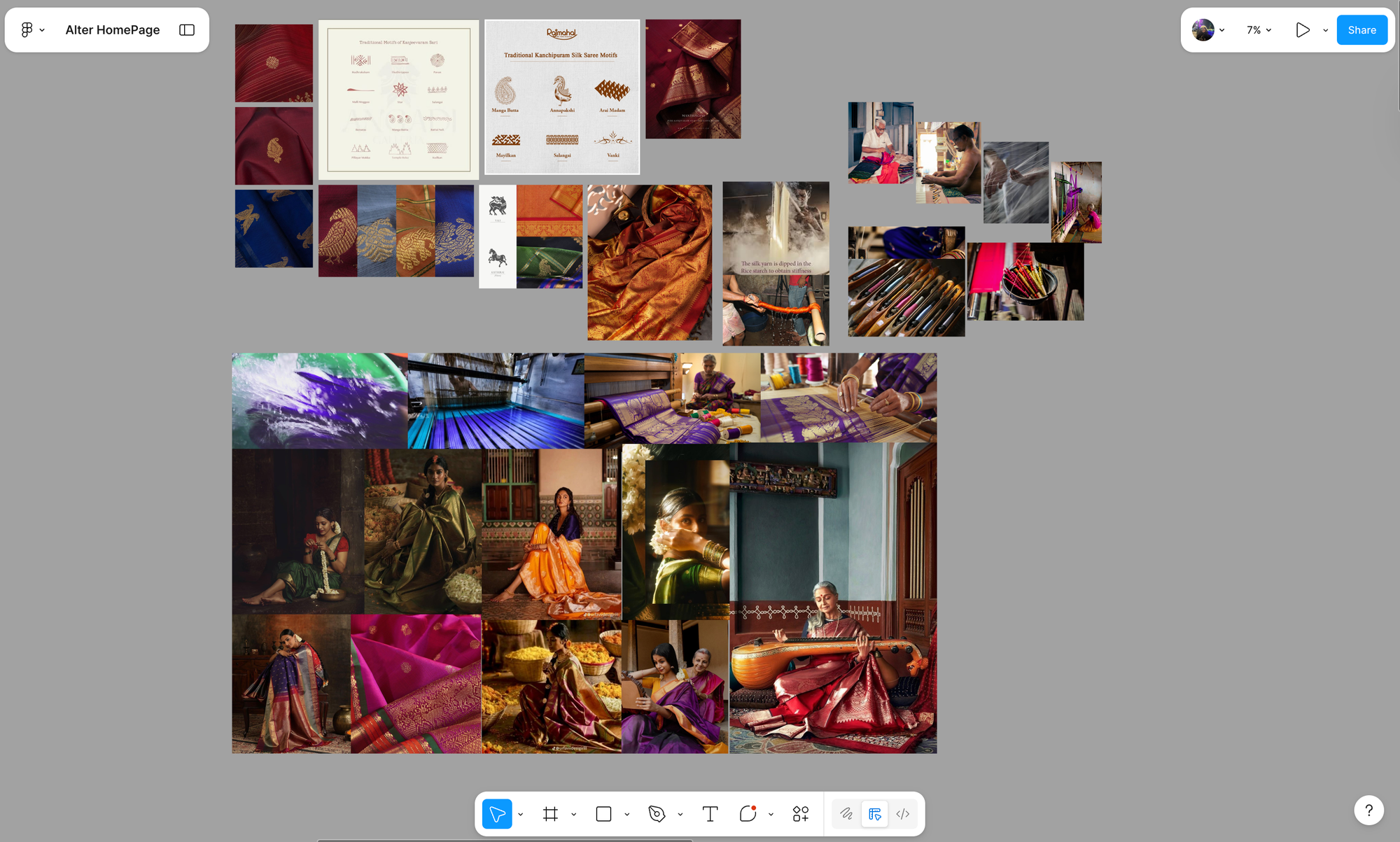
This was a stunning piece, and the design had to shine. We had to do justice to the words Nivedita brought to life. The original piece was 10,000 words, and stepping into the world she painted was inspiring.
Where it all began
A week into ideation, it became clear that an exclusive focus on the saree as a product risked reproducing the same flattening that so often accompanies craft when it enters visual culture: admiration without the reverence of what it takes to make a sari.
This is apparent in some of our initial work
In my initial reflection, I posed the question of how we want to feature women in the story?
What the role of the wearer, the end consumer?
While the first video opener, focussed on the motif, it simply did not strongly signal the article’s ambition.
The second did no justice to either the saree or the wearer, remaining simply an aesthetic choice.
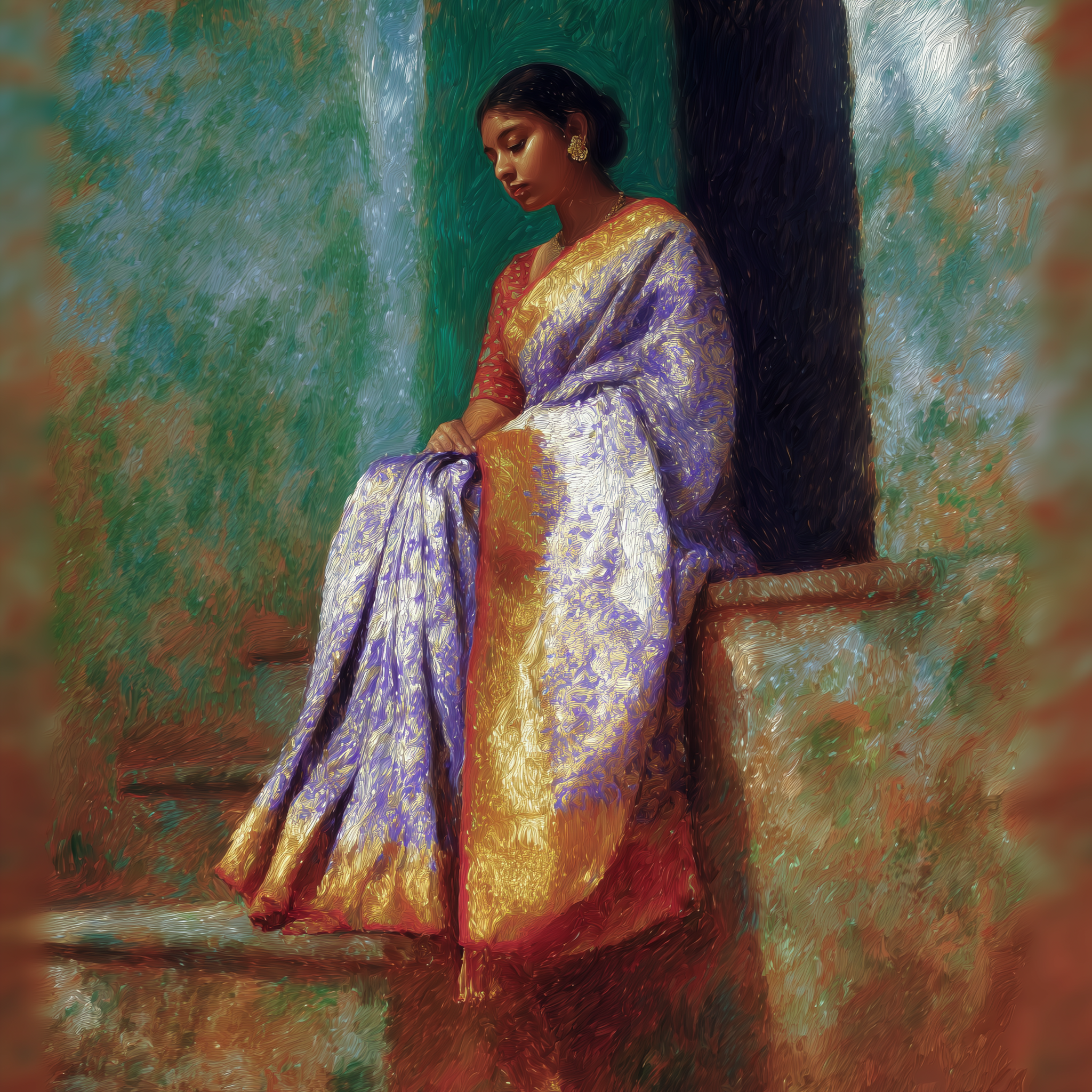
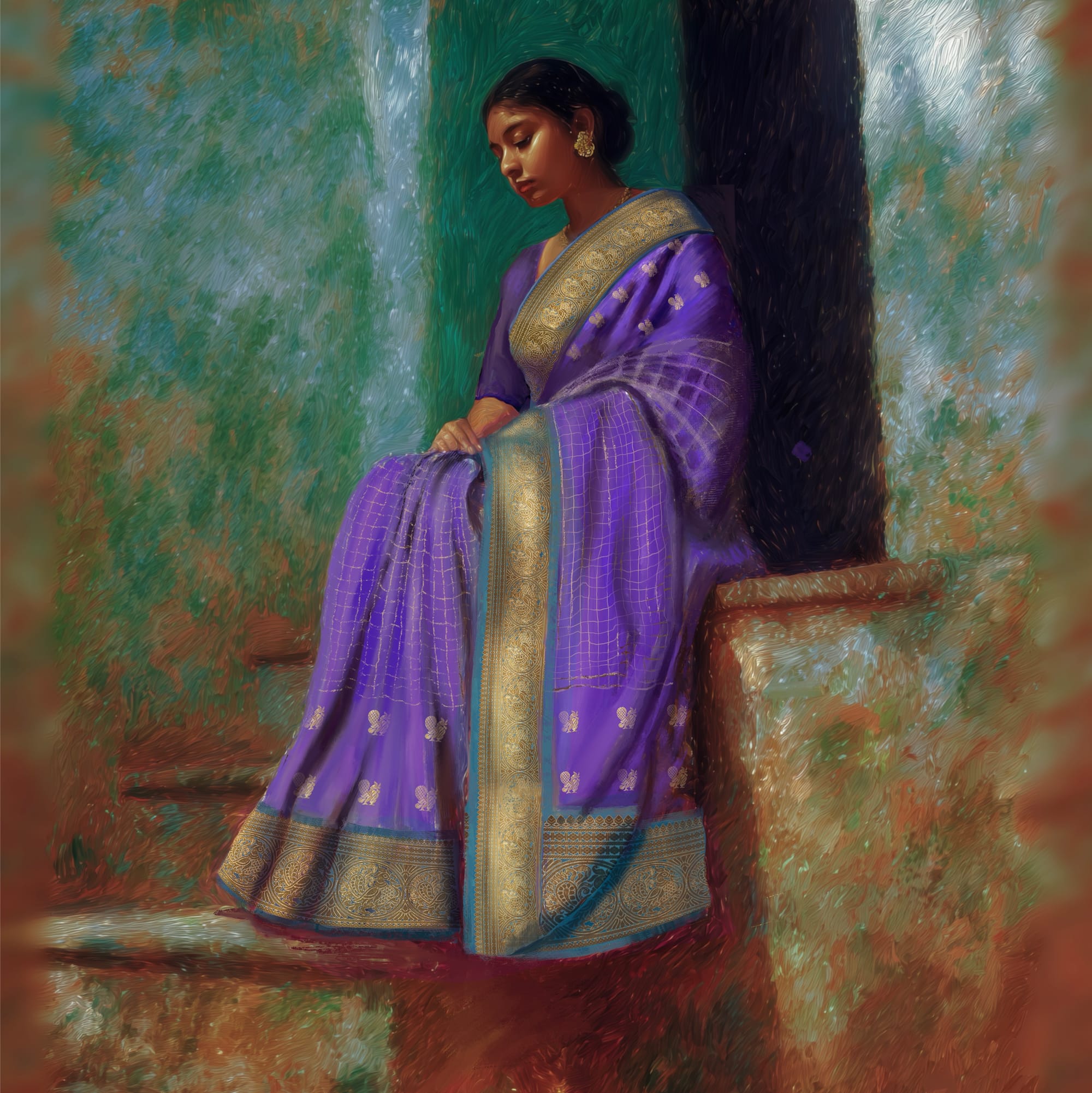
The full pose with a purple Kanchipuram we painted, combining AI generation and hand illustration to ensure the motifs remained crisp
It took us days to get the textures right, after all, the representation of the motifs and the grammar of the saree, was an integral dialogue in the piece. The design had to do justice to this syntax. After an extended internal debate, we made the decision to step away from this approach altogether.
We were on a tight deadline. Mind you, Alter Mag is a luxury we choose to indulge in. Alt Carbon has its own demands and a strict, confined aesthetic that is demanding to even a seasoned designer.
The work did not require another ’aestheticisation’ of the saree. The article, at its core, was about process rather than outcome. Our focus shifted to the choreography of making: the coordination of hand, foot, and eye. The accumulated intelligence of the weaver who was trained over years to respond to tension, rhythm, and error. Once this became our anchor, the visual language had to follow.
From a creative development standpoint, we wanted to explore how fabric can be felt through a digital interface. Motion and interaction act as a metaphor for touch—echoing the experience of handling and comparing saris in a physical sari shop. An additional direction was to explore switching textures on click, revealing the variety of patterns and motifs within the same form.
One of the ideas we scrapped, because of the constraints of time to perfect it ⬇️
My initial inclination was to use a spinning female figure as a loading motif, both as a visual anchor and as a quiet reference to the first issue of Alter — a soft tribute to Begum Rokeya.
The idea was refined by Manish, our creative developer. He ensured the focus did not rest solely on the saree but on its wider context, using text composition and restrained visual effects so that the figure functioned as part of a larger narrative.
From ascii characters to hexa codes to core literature that defined the tempo of the piece: The Ghost in Jacquard, Digital Passports, Yalis, Picasso Problem, hexcode, ASCII. Here are a few examples of easter eggs in the design:
╬═╬═╬ KORVAI ╬═╬═╬
╬= junction / binding- Korvai = complex interlock technique
Meaning:
Structural emphasis on border-body integration
பட்டு ~ ∿ ~ பட்டு
Tamil word repetition
பட்டு= Silk
Meaning:
Silk → process → silk
(Cycle of material, labor, and tradition)
FERMENT.pH: 10.4
Chemical notation
Meaning:
Alkaline fermentation — consistent with indigo dye vats
Through this process, we wanted to give the loader the feel of an archive booting up, connecting craft and computation.
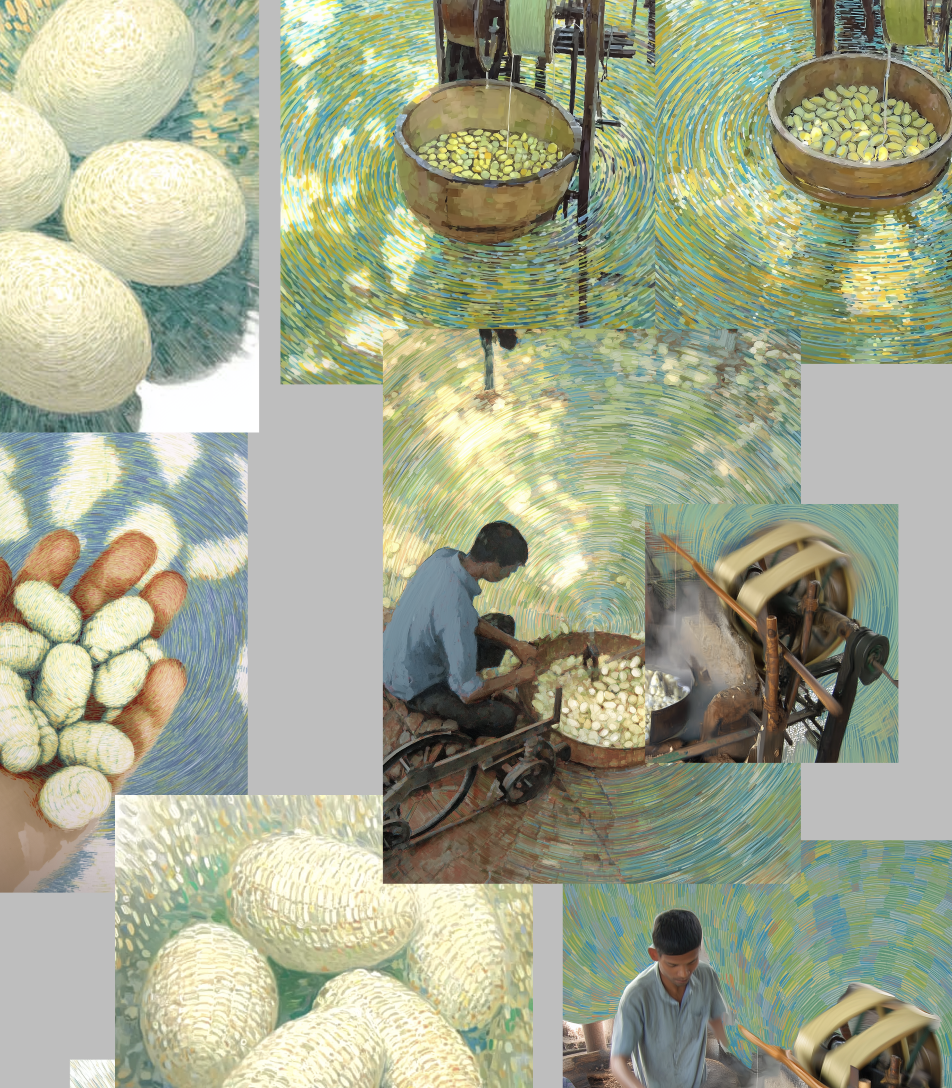
In the next step, we sourced and edited together the exact choreography of the loom, connecting from the wearer, back to the creation process. Finally for the fluttering saree piece, we painted it from scratch. The painting process is captured below 🔽
Understanding the weaver
The focus on illustrations shifted from celebrating the object, to attending to the conditions of its emergence. We chose to foreground labour as something materially uneven, economically constrained, and structurally undervalued.
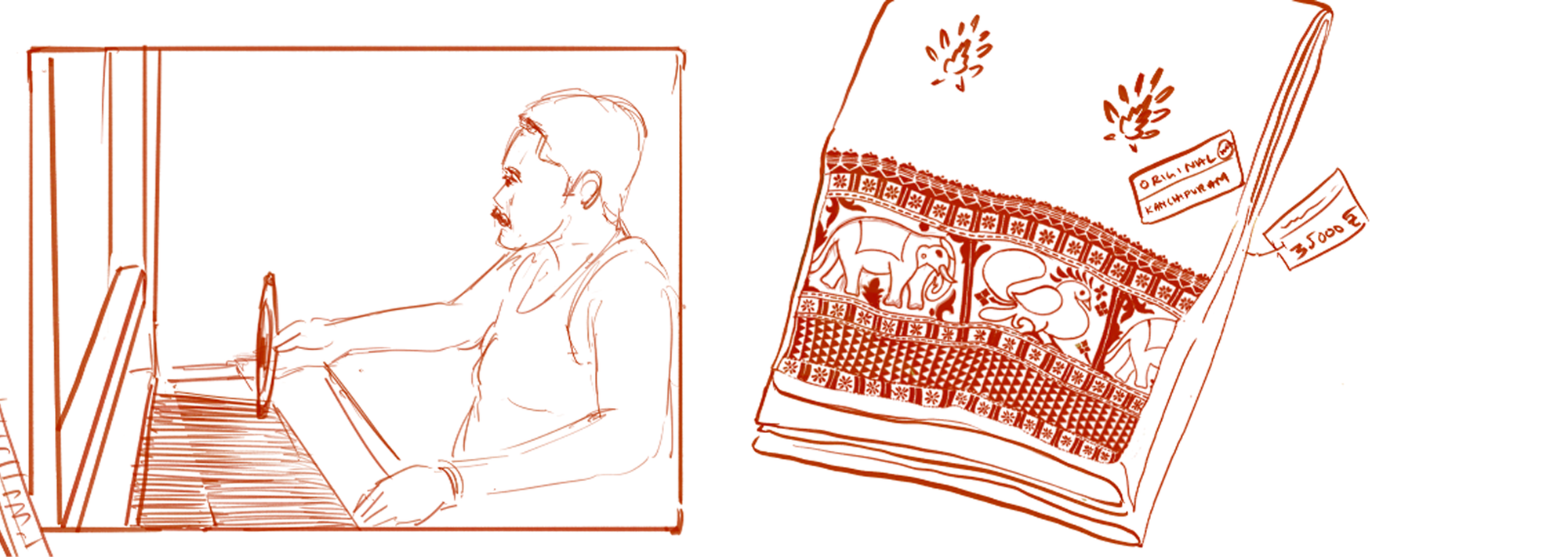
One of the most telling realities of a Kanchipuram saree is not found in its ornamentation, but in its distribution of cost. Of an approximate price of ₹31,500, only around ₹5,000 goes to labour, while the majority is absorbed by silk and zari. This imbalance is rarely visible in the way the saree is discussed or displayed.
We made it visible through an interactive illustration that showcases the part of the sari and the costs associated with it. The page highlights the different portions of associated costs so the reader can visually fathom the labour intensive process of making the sari.
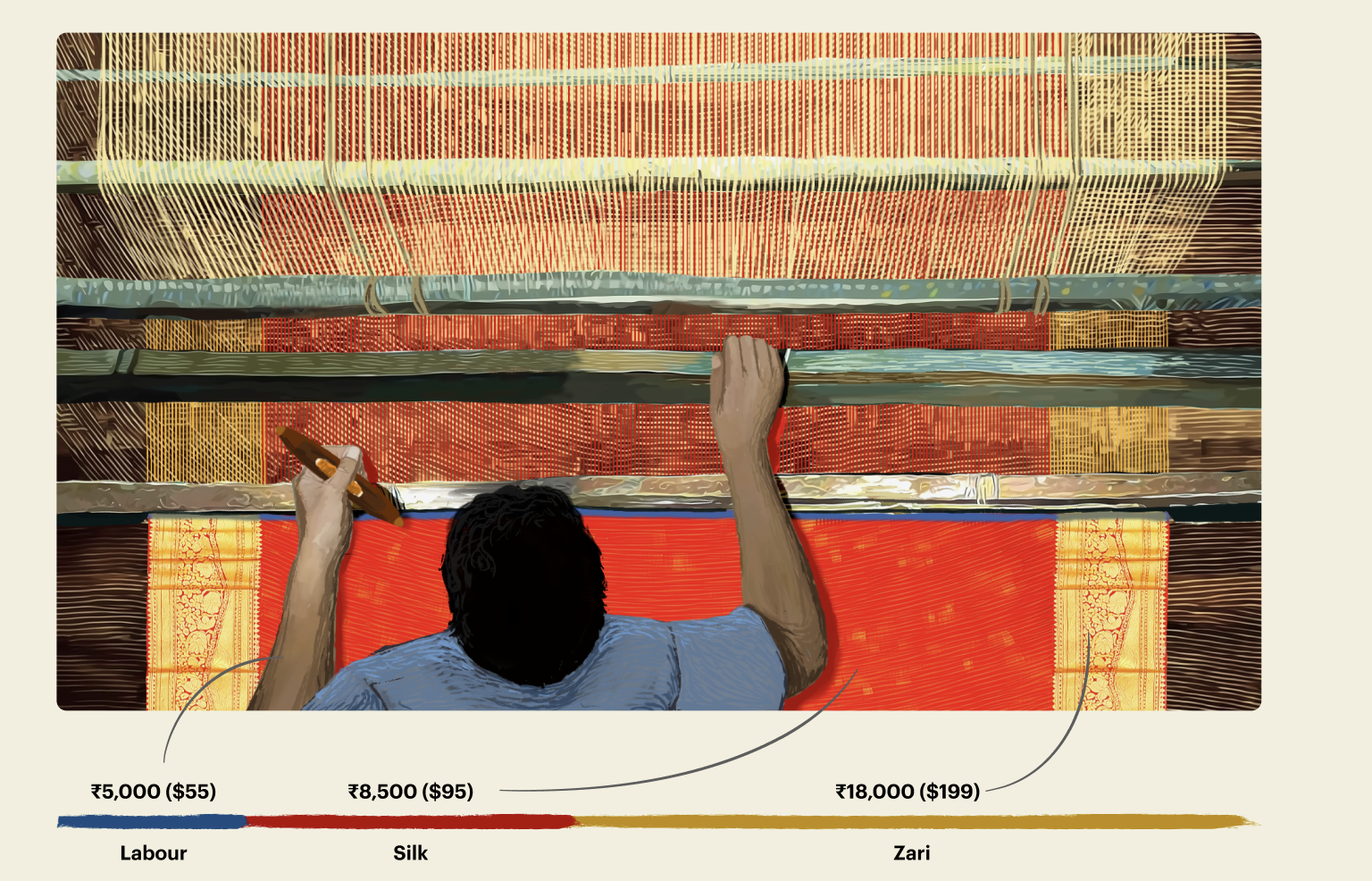
This illustration was thought through, composed and recomposed by Abhijith. How we ideated it 🔽
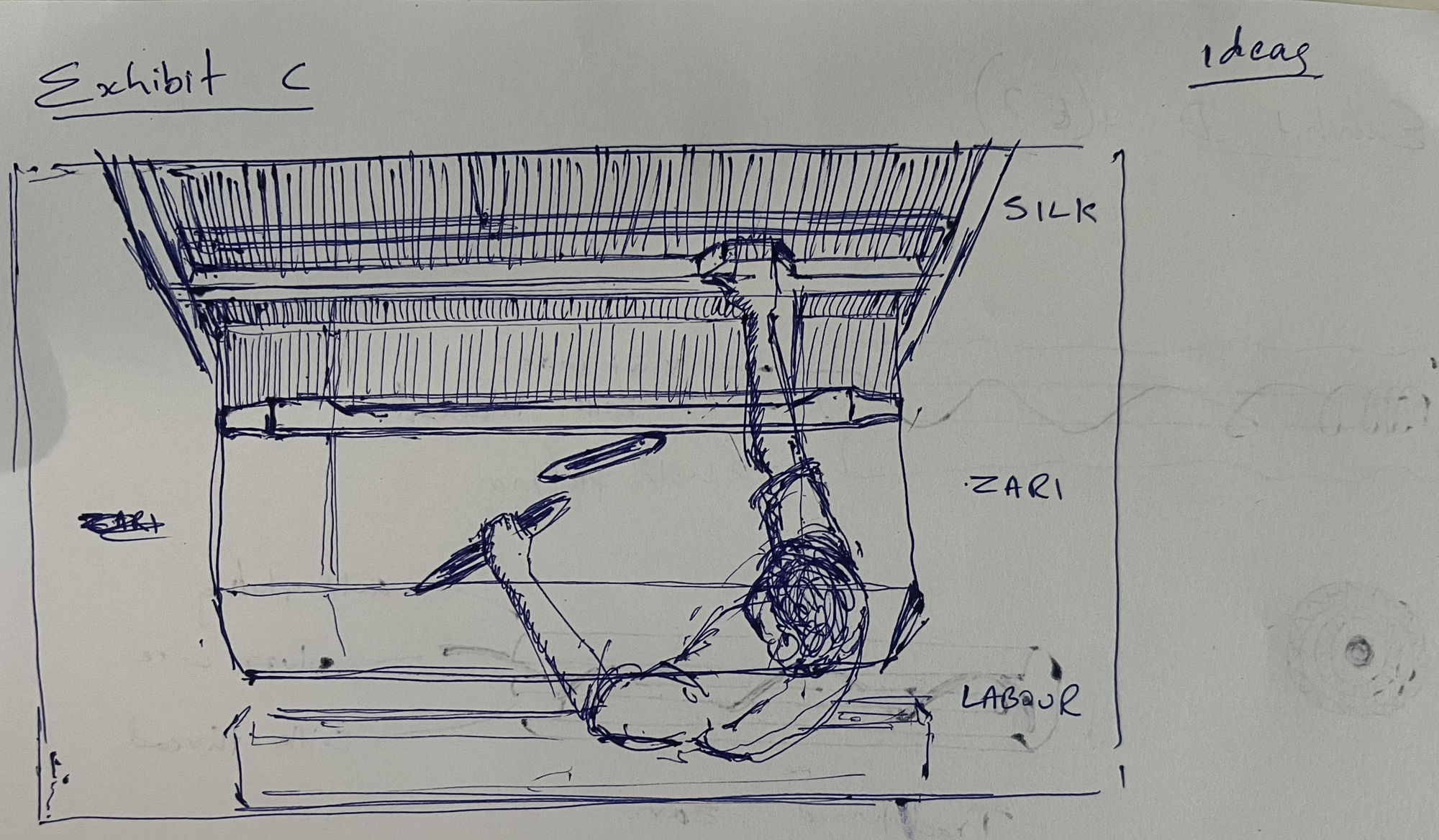
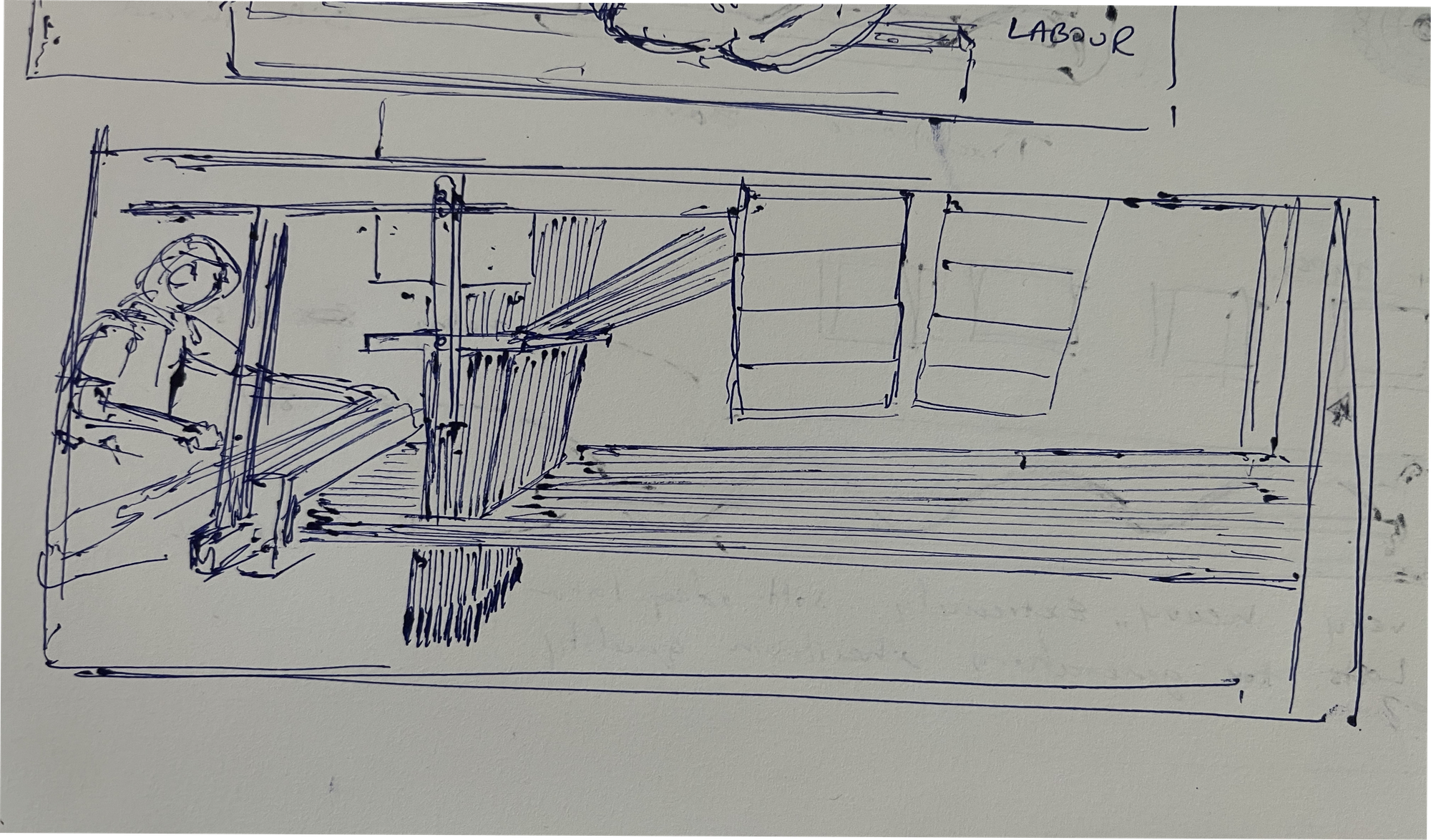
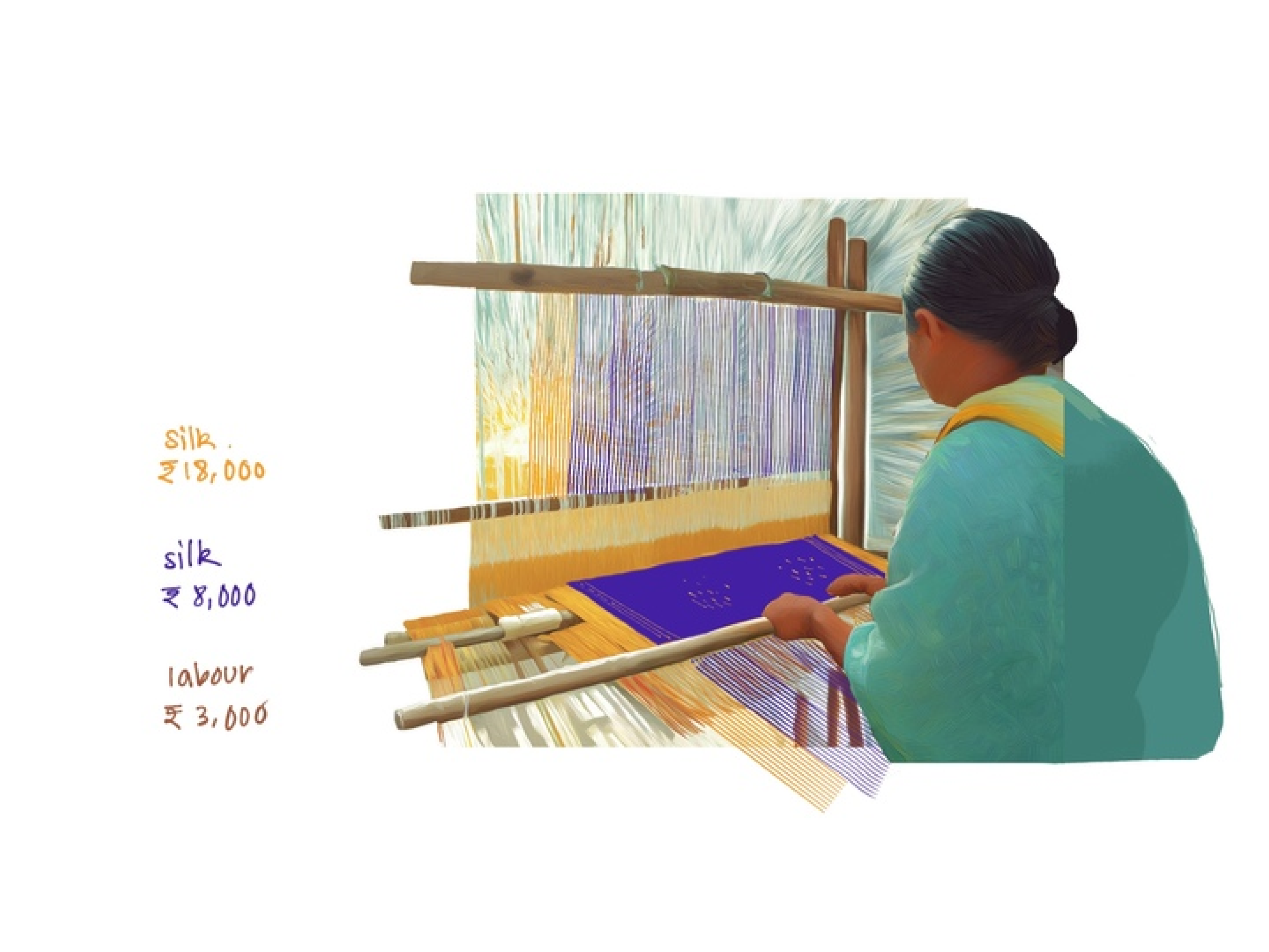
Early sketches and composition options
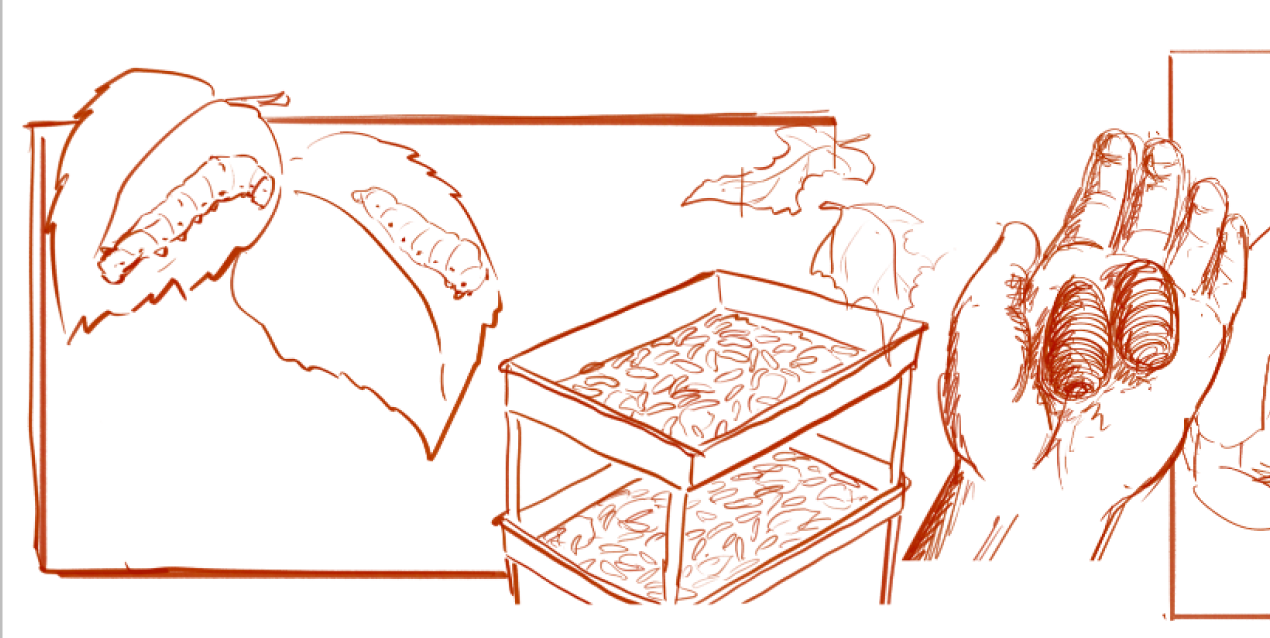
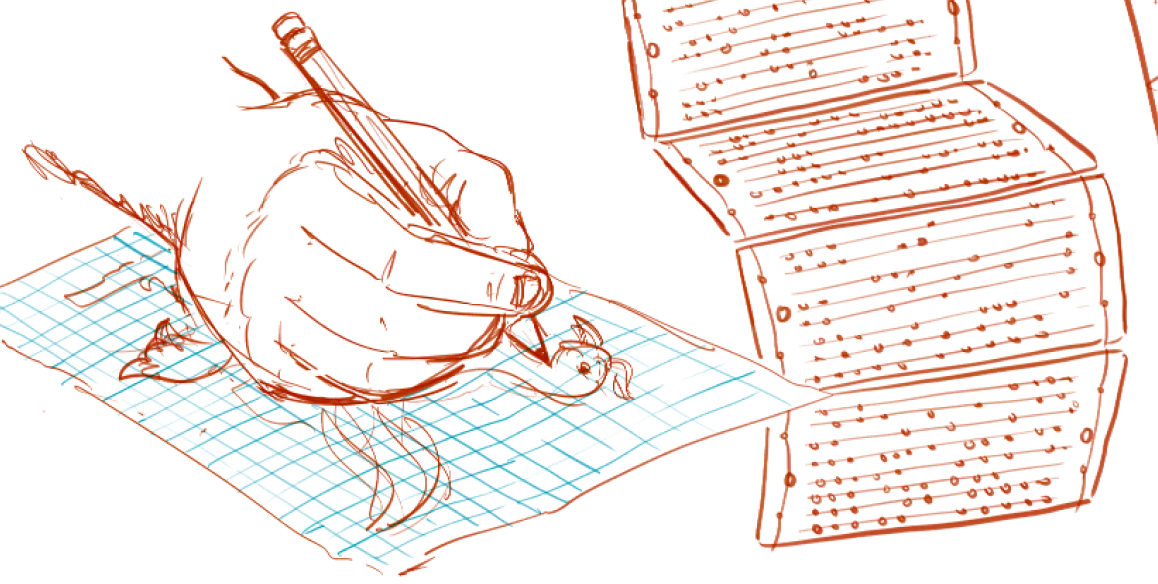
The making of a sari
Some of the visuals we developed did not sit neatly within the flow of the article itself. For instance, there wasn’t a direct entry point to the making of the saree, rather it was an addendum to the article’s flow. We retained them anyway.
We wanted this because not everyone would know this intuitively, but having it visually narrated makes it simpler to consume.
The making of a saree does not conform to clean narrative arcs, and we resisted the urge to overfit the process into editorial efficiency.
Allowing excess and digression felt more honest to the subject 🔽
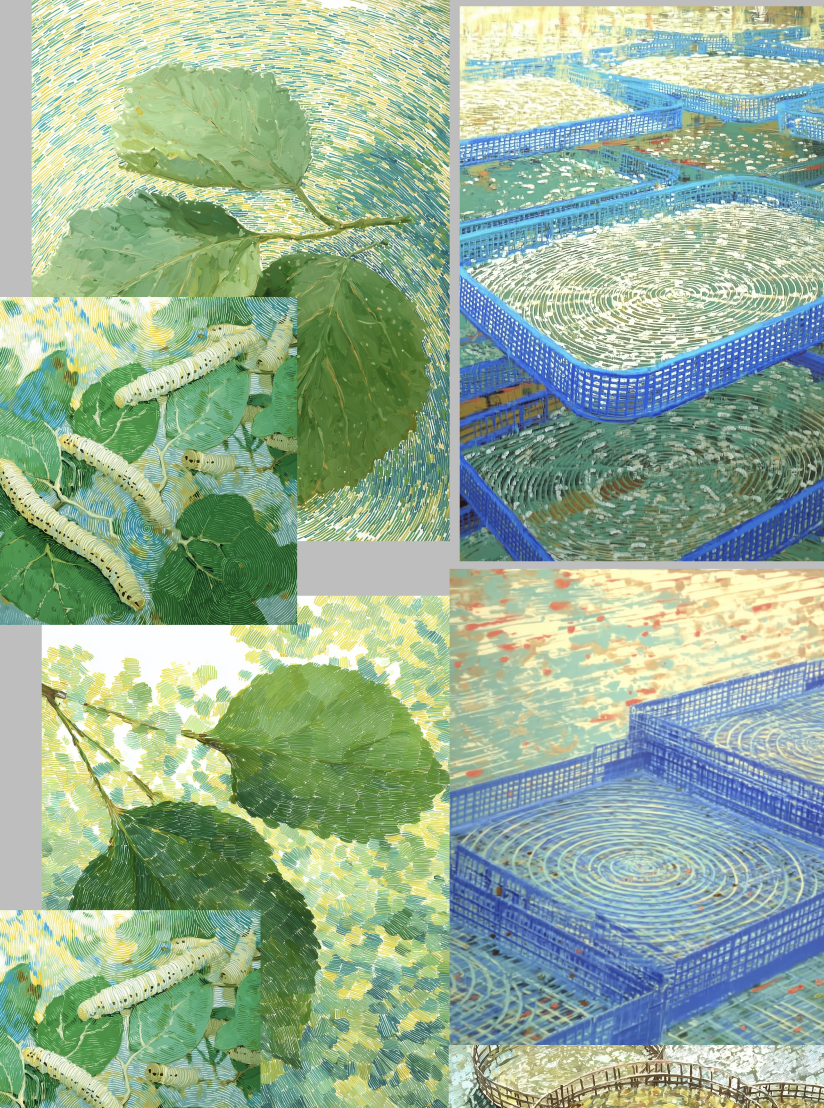
Composition and storyboarding by Abhijith
It was within this context we made careful decisions about the use of AI. We use AI to explore surface, light, and painterly texture at a scale that would otherwise have been difficult for a small team working under tight timelines (We’re a team of 3).
AI was never used to generate motifs or cultural grammar. Those elements were drawn and composed by hand as seen in the process above. What AI assisted with was impressionistic texture, atmospheric density, and exploratory variation. All of these were subsequently edited, corrected, and constrained through human judgment.
Bias and narrative coherence were treated as part of the design process rather than post-production checks. Outputs that did not align with the cultural or conceptual intent of the article were rejected and reworked. We scrapped a lot of ideas and reworked even more.
3D modelling explorations
We also turned deliberately to three-dimensional modelling for the piece. Authentic Kanchipuram saris are costly, copyrighted, and bound to specific contexts of ownership and use. We did not want to rely on branded imagery, nor did we want to simulate the real object in a way that pretended equivalence. Instead, 3D offered a way to study form, drape, geometry, and light without collapsing the handmade into the digital.
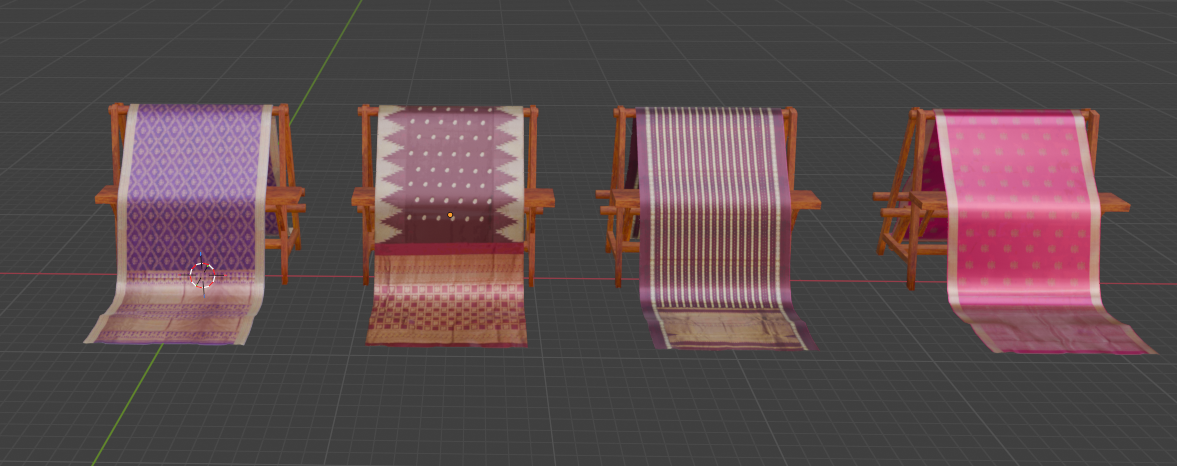
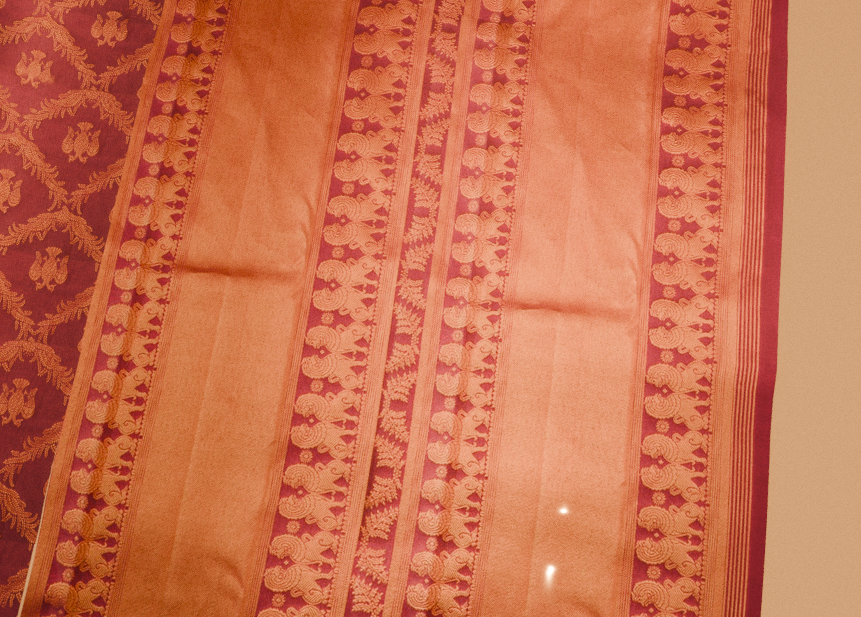
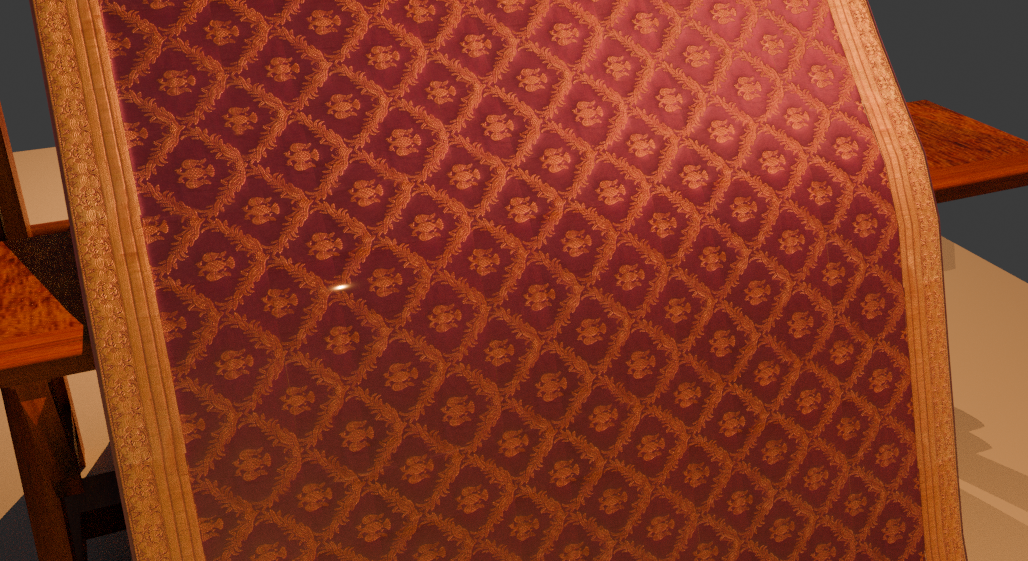
Modelled by Anish
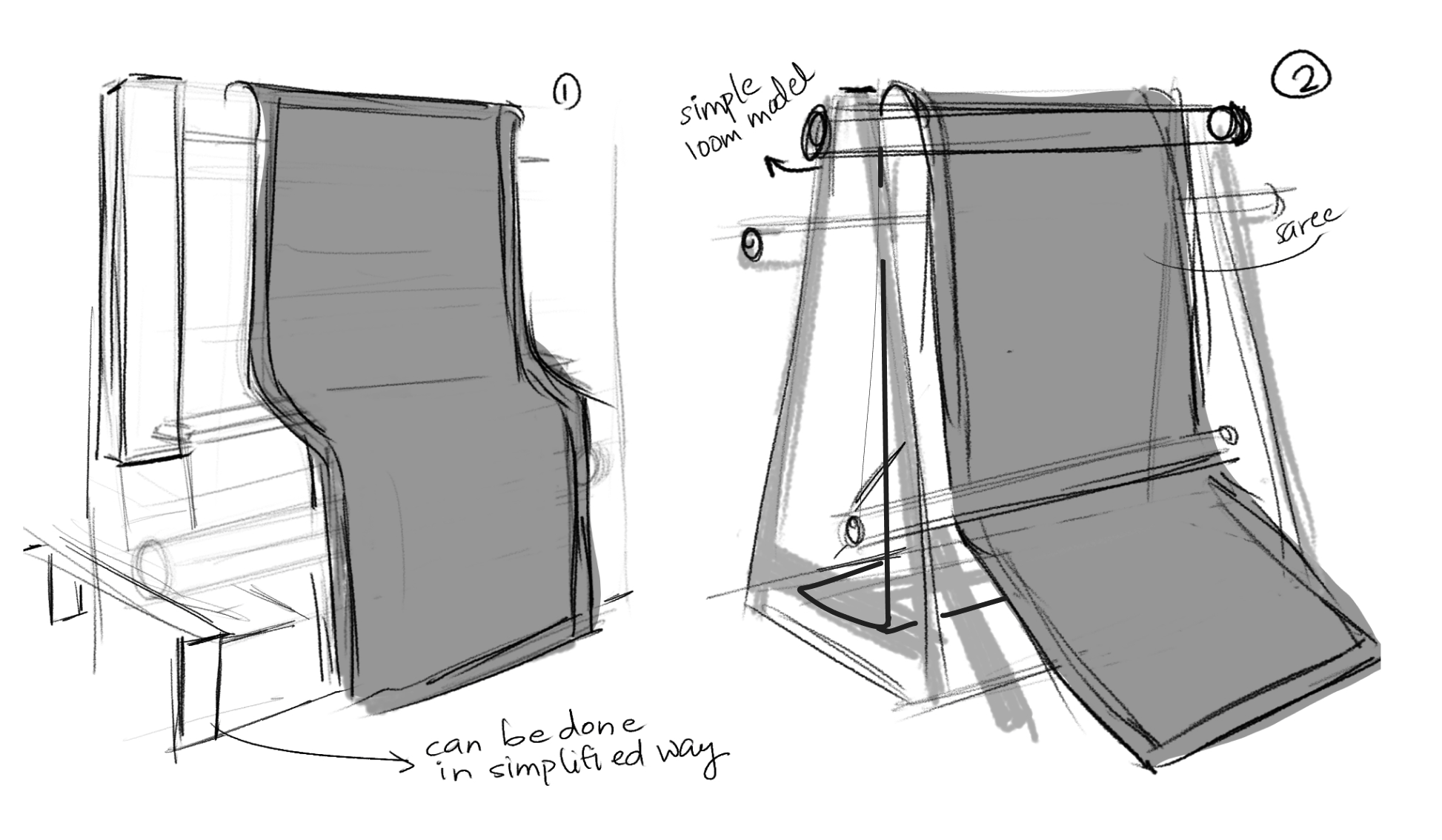
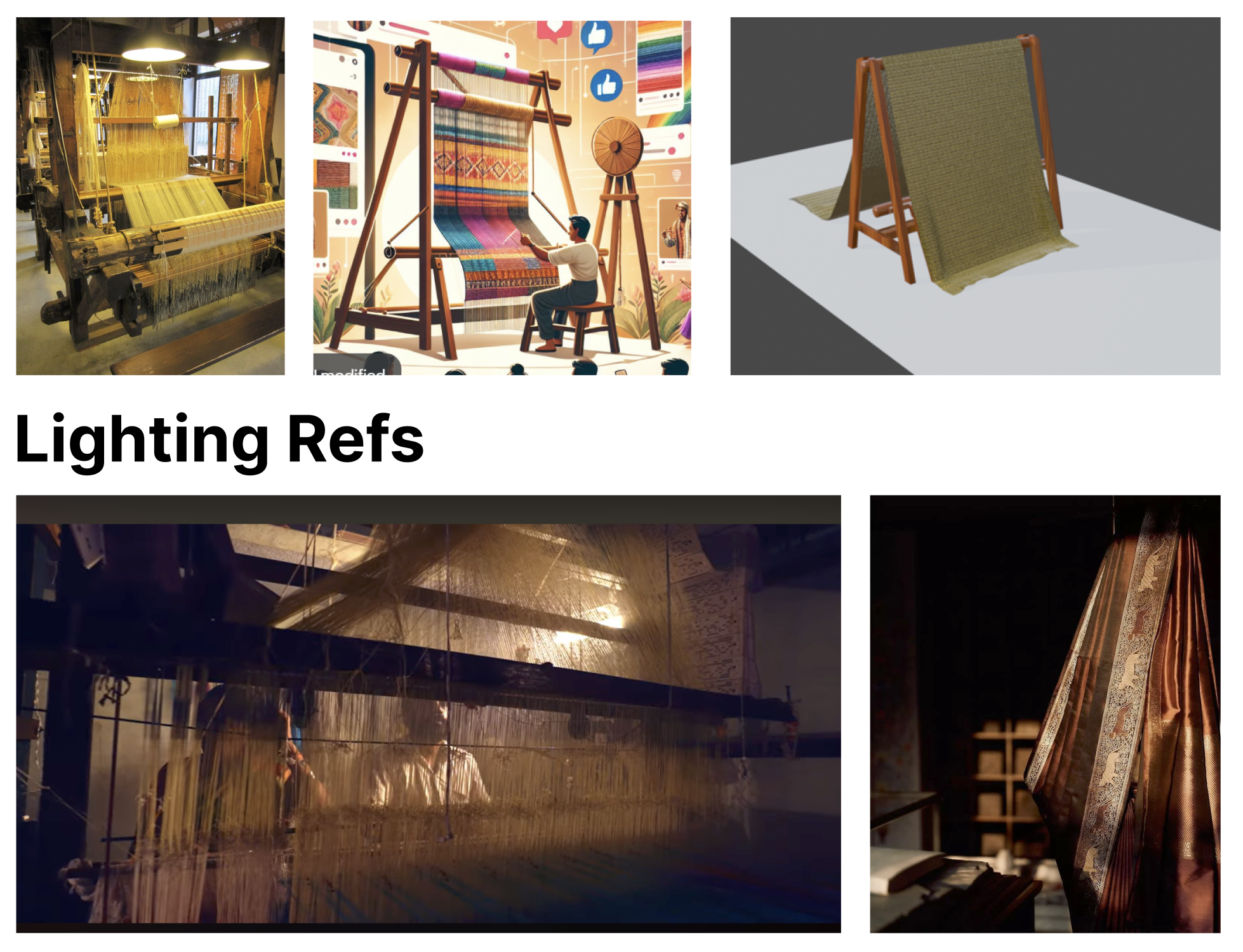
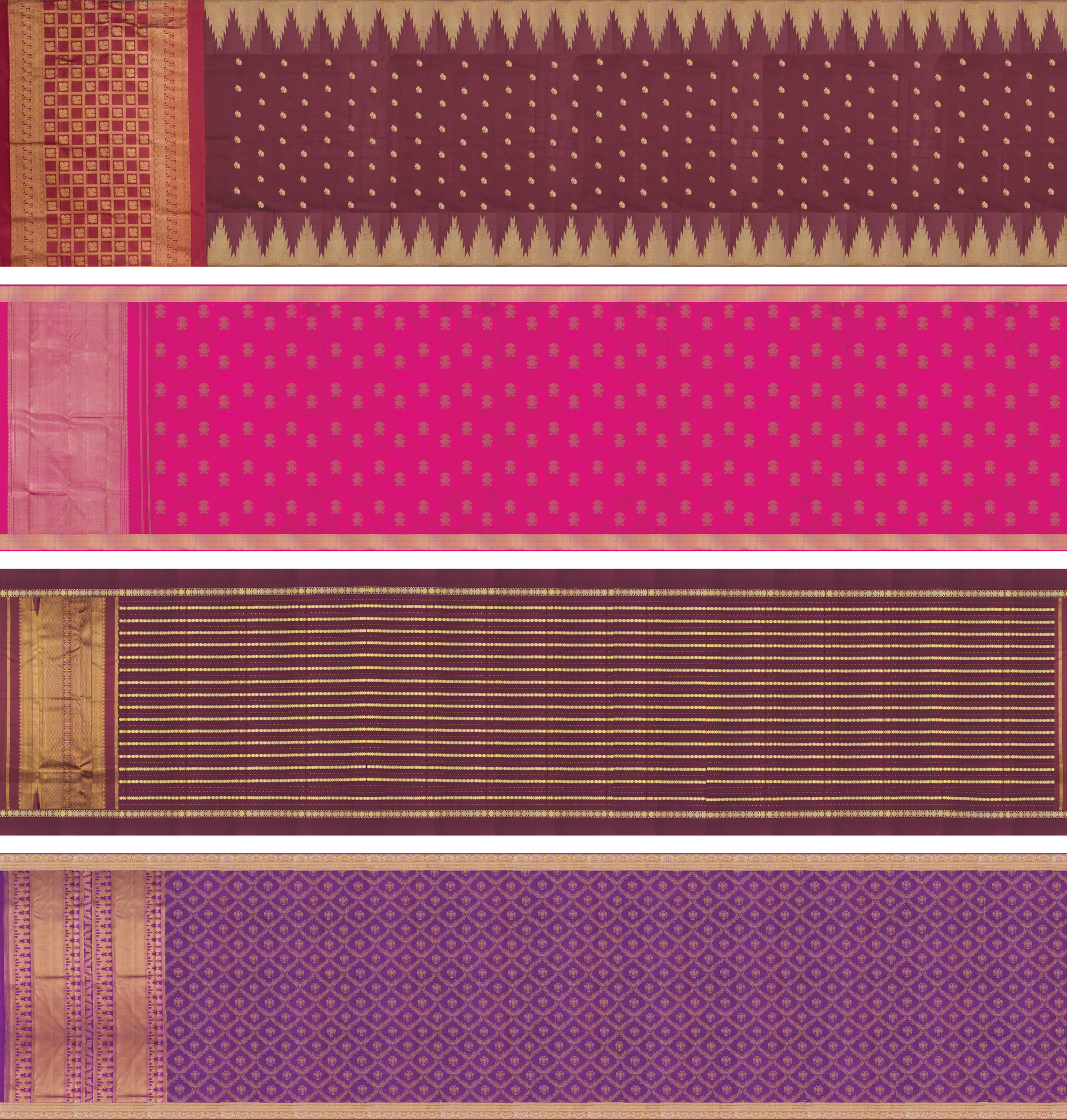
Ideation, lighting plans and textures, prepared by Anish
The joy of indulgence
In designing for Alter 03, we stepped into the tension between technology and craft. This happened serendipitously, but also taught us so much above how our craft (design) is evolving. We are all under the ambit of AI’s all encompassing dominance.
As designers, we bring taste and grammar, and AI is an ally to help us ideate and accelerate our workflow. That’s how we think of AI at Alt. And that’s also how Climate Studio — the brand vertical at Alt — thinks of AI tools.
Our goal with design was to make the labour of creation of a sari visible. We wanted to shine light on the intelligence of a weaver, uneven structures that give it a life, while recognising that some forms of making must remain beyond reproduction. The gap between the digital and the handmade will grow wider over time, and while the allure of handmade will be strong, a digital creation is inclusive.
There are no moral high grounds in creative pursuits, only explorations. And Alter 03 has been my favourite exploration so far. It is a luxury we get to indulge in, and hopefully we did some justice to it. If you think so too, please share our story, and tag us on socials.
We can do with all that love, after the labour 😊
End.